
- Home
- /
- Condition
- /
- Sciatica
Sciatica Treatment in North Scottsdale
Dr. Glen Tanner offers spinal adjustments to address nerve compression, combined with spinal decompression therapy and corrective exercise to help you achieve lasting relief from sciatic pain.

Common Sciatica Symptoms
Sciatica manifests as pain radiating along the sciatic nerve pathway from the lower back through the hip and down the leg. Symptoms vary in intensity and presentation:
Radiating Leg Pain
Sharp, burning, or shooting pain that travels from the lower back or buttock down the back of the thigh and into the calf or foot. Typically affects one leg more than the other.
Numbness or Tingling
Altered sensation in the leg or foot, often described as pins and needles. Numbness may affect specific areas along the nerve pathway depending on which nerve root is compressed.
Muscle Weakness
Reduced strength in the affected leg, difficulty standing on toes or heels, or feeling of instability when walking. Weakness indicates significant nerve involvement requiring evaluation.
Pain with Sitting
Discomfort that intensifies when sitting, especially for prolonged periods. Many patients report difficulty driving or working at a desk due to increased nerve compression in seated positions.
Pain with Movement
Sharp pain triggered by specific movements such as bending forward, coughing, sneezing, or transitioning from sitting to standing. Movement-related pain indicates mechanical compression.
Night Pain
Difficulty sleeping due to pain that worsens when lying down or prevents finding a comfortable position. Night symptoms often indicate more severe nerve irritation.
If you're experiencing any of these symptoms, comprehensive evaluation is essential to identify the underlying cause and develop an effective treatment plan.
What Causes Sciatica?
Sciatica results from compression or irritation of the sciatic nerve or the nerve roots that form it in the lumbar spine. Understanding the underlying cause is essential for effective treatment.

Herniated or Bulging Disc
The most common cause of sciatica. When disc material extends beyond its normal boundary, it can compress adjacent nerve roots. L4-L5 and L5-S1 disc herniations most frequently cause sciatic symptoms.
Spinal Stenosis
Narrowing of the spinal canal or nerve root openings reduces space for neural structures. Stenosis often develops gradually from degenerative changes and typically affects patients over 50.
Piriformis Syndrome
Tightness or spasm in the piriformis muscle can compress the sciatic nerve as it passes beneath or through the muscle. This non-spinal cause mimics disc-related sciatica.
Degenerative Disc Disease
Progressive disc degeneration reduces disc height and stability, potentially leading to nerve root compression. Degenerative changes often develop over years before producing symptoms.
Spondylolisthesis
Forward slippage of one vertebra on another can narrow the space available for nerve roots. This structural instability creates both direct compression and inflammation affecting the nerve.
Facet Joint Dysfunction
Inflammation or hypertrophy of facet joints can contribute to nerve root irritation. Facet problems often coexist with disc pathology, creating multifactorial nerve compression.

Why Temporary Relief Isn't Enough
Standard sciatica treatment often focuses on pain management through medication, rest, or basic physical therapy. While these approaches may reduce immediate symptoms, they frequently fail to address the mechanical dysfunction causing nerve compression.
Pain medication masks symptoms without addressing causation. Rest may reduce acute inflammation but doesn't correct the disc herniation, spinal instability, or muscle imbalances perpetuating the problem. Standard physical therapy may strengthen muscles, but without restoring proper spinal mechanics and reducing nerve compression, improvement plateaus.
Many patients experience initial improvement followed by recurrence because the underlying structural problem remains unresolved. The disc is still herniated. The spinal canal is still narrowed. The biomechanical dysfunction that created the compression initially continues to perpetuate the problem.
Dr. Tanner's Approach to Sciatica Treatment
With over 30 years of clinical experience and advanced certifications in sports medicine and physiotherapy, Dr. Tanner has developed a treatment protocol specifically designed to address sciatic nerve compression and the biomechanical factors that perpetuate it.
- C.C.S.M.S
- Sports Injury Specialist
- Licensed in Physiotherapy
- TPI Certified

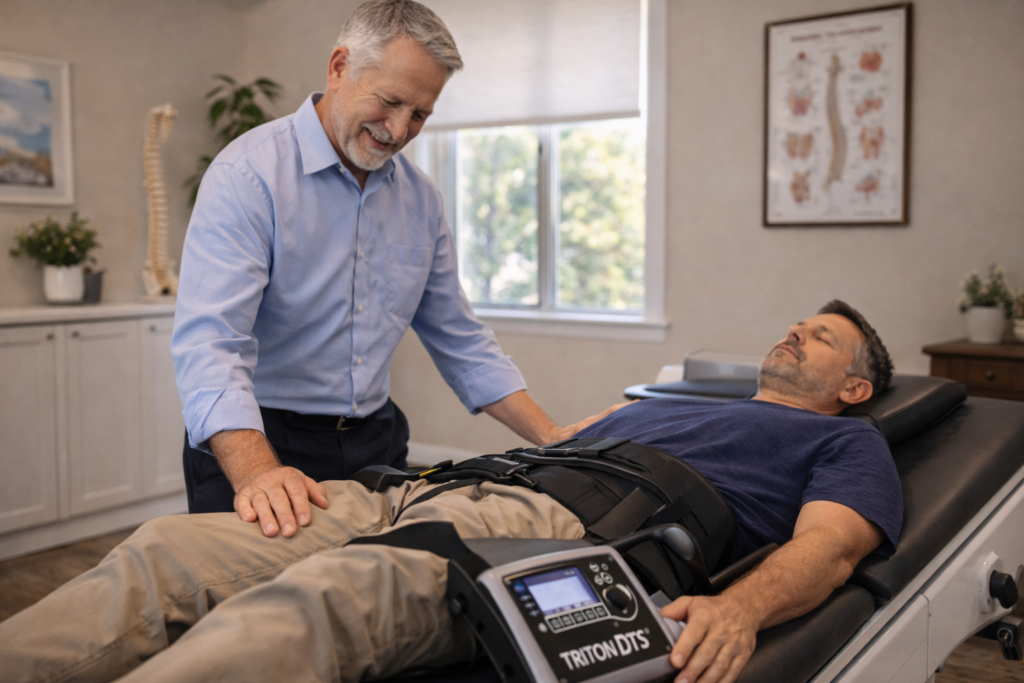
Specialized Training in Nerve Compression Syndromes
C.C.S.M.S (Certified Chiropractic Sports Medicine Specialist) - Advanced training in neurological evaluation and treatment of nerve compression syndromes

Comprehensive Neurological Assessment
Treatment begins with thorough evaluation including neurological examination to determine the specific nerve root involved, orthopedic testing to identify the underlying cause (disc, stenosis, piriformis, etc.), movement assessment to reveal biomechanical dysfunction, and postural analysis to identify contributing factors. This evaluation determines the most effective treatment approach for your specific presentation.
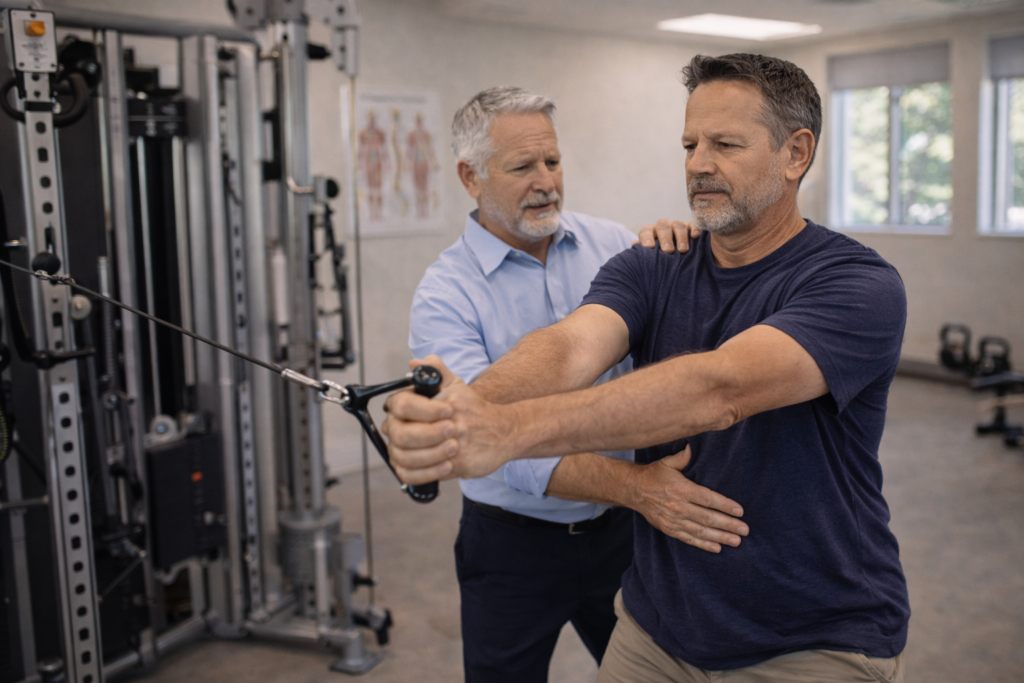
Customized Treatment Protocol
Based on evaluation findings, we develop a treatment plan using the most appropriate modalities for your condition. Not every patient requires every intervention - the approach is tailored to your specific diagnosis and presentation.
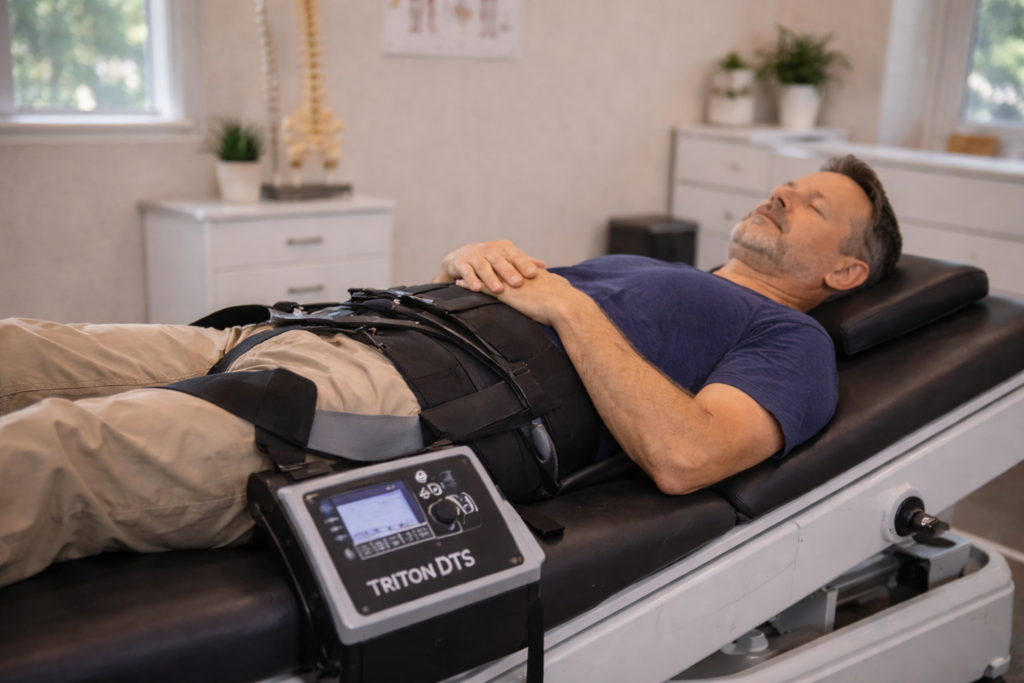
Spinal Decompression Therapy
For disc-related sciatica, we utilize Triton DTS spinal decompression. This non-surgical treatment uses controlled traction to reduce disc pressure, create negative pressure for disc retraction, and decompress affected nerve roots.

Chiropractic Adjustments
Precise spinal adjustments restore proper joint mechanics, reduce nerve irritation from facet dysfunction, and improve overall spinal alignment. Techniques are adapted based on the severity and location of nerve compression.

Comprehensive Assessment
Thorough evaluation including postural analysis, movement assessment, and identification of all contributing factors. You'll leave understanding exactly what's causing your pain.
What to Expect

Comprehensive Assessment
Thorough evaluation including postural analysis, movement assessment, and identification of all contributing factors. You'll leave understanding exactly what's causing your pain

Active Treatment
Customized treatment using only the modalities that deliver optimal results. Frequency and approach adjusted based on your response to care.

Corrective & Maintenance
Focus shifts to corrective exercise and movement training for sustainable results. The goal is independence, not ongoing dependence.
Most patients experience significant improvement within 4-6 weeks. Chronic conditions may require 8-12 weeks for optimal results.
Frequently Asked Questions
Spinal decompression is a safe, non-surgical treatment with an excellent safety profile when performed by qualified practitioners. Dr. Tanner's Board Certification in Physiotherapy includes specific training in decompression protocols. Contraindications are identified during initial evaluation.
Disc herniations are one of the most common causes of sciatica and respond well to our treatment approach. Spinal decompression therapy specifically targets disc pathology by reducing intradiscal pressure and creating conditions favorable for disc retraction and healing.
Ready to Address Your Sciatica?
Schedule your consultation with Dr. Tanner to receive a comprehensive neurological evaluation and customized treatment plan. During your first visit, we'll identify the specific cause of your sciatic pain and develop a strategic approach to lasting relief.